The Church in Many Houses by Steve Cordle – a review

This book by Steve Cordle was very well organized and followed a very logical progression of reasoning. In part one, he dealt with the emerging cell movement. The author discussed the signs of hope which are emerging from the cell-based movement around the world. The examples of cell-based churches which are thriving around the world helps to support some of the statements and conclusions the author proposes in the rest of the book. Cordle discusses the problems that many of us see all around us in the American church. He made the statement that in the U.S. the growth which is occurring appears to be, “a mile wide and an inch deep.” This is something that I appreciate over and over in the cell-based materials which I have read (which is not extensive). The focus is biblically-based disciplemaking. The proponents want to see the lost converted and then trained to be disciplemakers. The author provides some foundational definitions in the opening chapter. He discusses what is a cell church and what is a cell. This helps to lay the foundation for understanding everything else that he discusses in the book. It is apparent to the author that there are many fads swirling around in the church-world. He addresses this issue directly by pointing out the N.T. model (which appears very similar to cell-based ministry) and the strategy which John Wesley implemented during his ministry. Cordle proposes that cell-based ministry is far from being a fad and is an extremely biblical approach to ministry.

Chapter two was an interesting one for me. The content revolved around providing a real-life example of a woman who entered the cell group as an unbeliever and then moved all the way through the process to the point of becoming a cell coach. One thing that is still eating at me is the lack of a clear conversion to Christ in the life of Martha, who is the chapter’s example for cell-based ministry. This may just be a lack of clarity on the part of the author but it still is a concern for me. It is not proper to have an unbeliever leading a group or coaching a group. She would need to repent of her sin and believe the gospel. Aside from this issue I did feel that Cordle’s picture of the different facets and levels of cell-life was helpful. It made it as though you were observing group life in a cell-based church ministry. The author’s description disciplemaking strategy of a cell-based church was also helpful. The four stages: Reach, Connect, Equip, and Send provided a solid map for those who may be entering the cell-based ministry. One thing I am unsure of again is what Cordle means by reach. It appears from his writing that he is referring to an individual merely attending a cell or celebration. I do not want to sound picky but I think that the word reach is not helpful for such a step. I would prefer to have the step defined as reach refer to someone being born again, rather than referring to attendance. I am certain that my apprehension stems from the lack of clarity in regard to Martha’s conversion (or lack thereof).

I thought the chapter entitled Thinking Differently was very useful. Cordle does not try to paint a perfect and painless transition to cell-based ministry. He acknowledges that each person has a picture of church ministry. The reality is that not all of these pictures is biblical nor proper. Yet, he instructs that transitioning to cell-based ministry will fail if the only change is in structure. The author makes it very clear that the leadership must teach for a change in understanding and values. He proposes that once this changed in understanding and values occurs, those in the church will view a transition to cell-based ministry as the only possible solution. I thought that this chapter was one of the most beneficial in the entire book and it solidified the validity of his earlier statement that cell-based ministry is not a fad. So much today is more fad than unchanging. This has resulted in many in ministry leadership bouncing from fad to fad looking for the “silver bullet” which will lead them to the promised land of ministry success. Cordle declares that the process of transitioning to cell-based ministry by educating and transforming people’s understanding and values will take time. He admits that it took him about two years to understand and accept cell-based ministry as the right approach to ministry. Therefore, it led him to be patient with those he was leading. This is great advice for those who are involved in any area of ministry leadership.

The following chapters which expand on the five areas in which a transition in understanding and philosophy were helpful. They really clarified what Cordle was proposing in chapter four. The five areas are: moving from growing deeper to reaching outward; moving from member to disciplemaker; moving from educating to equipping; moving from programs to relationships; and moving from church with cells to church that is cells. Each one of these areas make sense as being essential to the process of transitioning from how one traditionally views church to how the cell-based church approaches ministry. Cordle is right, it is entirely different. He compares transitioning to the cell-based church from a program-based church as someone losing his equilibrium and having to regain his footing. The cell-based ministry is so different from what “we have always done.” Interestingly enough, Cordle appears to have taken us as readers through the same process which he advises everyone considering the change to employ. He has slowly brought us into the transitional process. There are things in the book that are a bit uncomfortable with me mainly because I am uncertain of his standards or definitions when it comes to salvation and spiritual maturity. Yet, I think that his part two of the book which deals with laying the foundations is an excellent blue-print in transitioning to a cell-based church ministry. It seems as though someone could employ these same steps in teaching his own church as a means to transitioning from a program-based church to a cell-based church.

I would say that one way I would use the principles provided in this book would be fine-tune the material found in parts one and two of the book. I really liked how Cordle transitioned the thinking of his readers to understand cell-based ministry and its apparent beneficial aspects of disciplemaking. I would want to find use the material (making my own) to describe cell-based ministry and then to provide a personal example of someone whose life was changed through cell ministry. This personal example becomes so powerful when it encompasses each phase of the cell-based ministry process. I completely agreed with Cordle’s identification of the five areas which must change for a program-based church to properly transition to a cell-based ministry. I think I would take these five areas and define them myself for the purpose of teaching a program-based church with the goal of transitioning them to become a cell-based church.

I thought that overall the book was beneficial. Again, I thought that the structure of the book was one of the most beneficial things.

Reblog this post [with Zemanta]

Why Discipleship is Our Only Hope

I came across this post from Bill Hull today.  Bill is also the author of the excellent book The Disciplemaking Pastor.  I highly recommend it if you have not read it.  It provides a much more biblically sound ecclesiology than is practice in most evangelical churches.

The post deals with the problem present in most evangelical churches – no planned discipleship.  Our history has led to this crisis.  Evangelical churches still hold to a one-time crisis conversion event.  When this event occurs the only prescribed steps of discipleship which follow are a membership class and baptism.  This has led to a spiritually anemic church.  Hull urges us to consider the biblical mandate.  Here is a brief taste of the post:

The reason the Christian faith has not transformed American culture is that it has not significantly transformed the majority of Christians. The American church has taught a gospel that most often has been unaccompanied by discipleship.When the gospel loses discipleship, it loses the permission and the ability to teach people deeply. This eliminates the process Jesus commanded, “ teach them to obey everything I have commanded you.”

Reblog this post [with Zemanta]

Planting Churches that Reproduce

Joel Comiskey divides the book into three sections in which he outlines: first, the foundations of a simple church; second, the principles of a simple church; third, the strategies for starting simple churches. He supplies many personal examples from his own church planting ministry experience, which is helpful. He also provides many examples of others who are in the trenches of planting simple church movements around the world. The examples of widespread simple church movements open one’s eyes to the possibility of rectifying many of the frustrations found in present ministry models. This is a breath of fresh air.

Comiskey begins the first section of the book by repeatedly emphasizing the difficulty of planting a new church. This is especially helpful for any who read this book. He does not leave out the harsh realities of beginning from scratch. The author likens church plants to cacti in the desert. He clearly states the truth when he proclaims that a church planter must win people to Christ or the church plant will not survive. This goes along with the principle that without people there is no church. One must grow to survive is the clear message of the author. Comiskey also clearly points out the need for developing leadership within the pilot small group. There must be training that takes place at a separate time to ensure that the believers within the pilot group are growing spiritually and being equipped to minister within the small group. Once a believer completes the training he is equipped to lead his own small group. Comiskey emphasizes the importance of every member being a minister within the group. This helps people to grow spiritually and to be carrying out the biblical principles of Christianity. Yet, the author never hides the reality of hardship in church planting. The honesty is refreshing.

Next, the author defines for his readers what it actually means to be a simple church. He repeatedly emphasizes the importance of the church model being simple enough so that it may be reproduced elsewhere. If the model is too complicated it will not be reproduced. Comiskey sets forth four principles which he believes help to define simply what a church is: first, it should have more than three people (Mt. 18:15-35); second, there should be God-appointed leadership; third, it operates under Christ’s lordship; fourth, it practices baptism and the Lord’s Supper.1 The author completes the first section by providing ample N.T. examples of a simple church model. In the two works which I have been exposed to so far, Comiskey attempts to recover a biblical model of doing ministry. This is admirable and inspiring.

In the second section, the author dives into the issues which must be settled before anyone attempts to plant a church (simple model or not). He spends a chapter questioning whether the potential church planter is actually supposed to be a church planter. He provides an example of a man who was passionate about planting a church but did not have the make-up to do so. Comiskey comments on a couple of different tools which help to evaluate the gifting and make-up of individuals to determine whether they should be church planters. He comments that everyone contemplating church planting should submit to some process of evaluation before planting.

The author suggests that future planters determine to prioritize prayer in everything they are doing in ministry. They will need prayer support from other believers to be successful. They also need to determine the core values of the future plant. Comiskey mentions that there are universal principles which will be included in the values but there will also be contextual variations in the values as the church attempts to reach its target population. The author speaks often of the importance of planting a church with a team rather than alone. He trumpets the benefits of shared leadership with a shared ministry load.

Beyond shared leadership, Comiskey urges the leaders to have a coach who will provide encouragement, prayer, ministry, and training. Part of the motivation for this is the discouragement that is often a part of the planting process. The author believes that the presence of a ministry coach will help the planter to endure the slow growth process. He also encourages potential planters to learn as much as possible about the area where they plan to plant. Missionaries on foreign fields must learn culture before and during their ministry overseas. Church planters must also become familiar with their ministry context. This also helps to establish contacts with potential members of the pilot group. There are many principles which must be seriously considered before attempting to plant a church.

In the third section, the author describes cell driven ministry and how to plant a cell church. There is overlap with the previous book, The Church that Multiplies, but the review is helpful. The principles of cell-driven ministry are inspiring. The process of: beginning a pilot cell and living the Christian life deeply together; training leaders; evangelizing as a group and discipling converts, multiplying groups with new leaders and coaching the leaders; the thought of the whole cell-driven model is exciting.

Following the chapters on cell churches, the author outlines how to plant house churches. As is mentioned in the material, house church networks and cell churches are similar in many ways. The words which are used repeatedly are: simple and reproducible. These words are music to my ears. One thing which I did not agree with was the lack of formal leadership in many examples of the house church. Comiskey also touches on this as a potential weakness, along with the lack of coaching for house church leaders. Some within the house church movement are working to resolve these issues. I also noticed a related issue to the lack of formally trained leadership, the lack of biblical training among house church leaders. This could truly harm the quality of the house churches. The potential for heresy would be present. The author mentions house church networks as a solution for some of the potential pitfalls of the movement.

Comiskey ends the book with a call to plant simple reproducible churches. I am in complete agreement with him. I would love to see, experience, and be involved in this model of ministry. I love reading about it but need to see it to be able to really understand everything he is describing. We do need to have more simple churches which are reproducible. I have thought over and over about the principles which the author shares. I long to be involved in a ministry model like the one the author outlines. It seems that this is as close to the biblical model as I have seen. As I seek God’s will in my life, I would absolutely love to learn firsthand how to function in, lead in, train in, and reproduce in a cell-driven ministry. I do not know exactly how this will happen but it is my prayer to do so.

Overall, I think this was an excellent book and very beneficial in formulating my thinking.

1pp. 45-46.

Reblog this post [with Zemanta]

The Church that Multiplies by Joel Comiskey – book review

The author begins the book by pointing out the apparent lack of effectiveness through the current model of church ministry in North America. He demonstrates this reality through statistical evidence provided by nationwide research. This is not new information for most who are acquainted with George Barna’s writings. This is also not new information for perceptive believers who attend local churches weekly. Comiskey is correct. Something is wrong. The church is not consistently or effectively reaching lost people. At various points throughout the book it is stated that the church is also not effectively discipling its people. This should garner the attention of anyone reading this book. Anyone familiar with the N.T. knows that evangelism and discipleship are two primary responsibilities of the church. When the church is failing at both it should cause us to reevaluate our approach and model of church ministry. This presentation of need motivates one to continue on in the book to see whether Comiskey presents a viable solution to these monumental problems.

The author presented an interesting list of the factors which aid the success of cell-driven church ministry in other cultures. He compared this with the factors which challenge cell-driven church ministry in North America. The obstacles Comiskey mentioned are so real: “the Sunday event”, the church as a building, American individualism, busyness, being task-oriented, and culture. These factors are great frustrations for anyone involved in vocational ministry. These are obstacles to biblical Christianity for those in vocational ministry who have never even heard of cell-driven ministry. In reading the comments on specific cell-driven ministries toward the end of the book, it appears that the aforementioned obstacles were the greatest challenge for those leaders who transitioned established churches to a cell-driven model. The leaders knew something was wrong but initially weren’t quite sure what to do about it. These obstacles did not prevent these leaders from seeking a solution. This search is widespread which resulted in the author referring to some of the recent books which have been written calling for a more simple model of ministry (Simple Church and Organic Church). Leaders in local churches are realizing that something is wrong, including myself.

Comiskey proposes that the solution for the spiritual defects of the current North American church is to transition to a cell-driven model of ministry. The church should be composed of cell groups composed of three to fifteen people which meet weekly for the purpose of the 4 W’s (welcome, worship, Word, and witness). The author repeatedly mentions that these cells should be emphasized as being equally important with the Sunday Celebration gathering (think “A.M. Worship service). New believers would also participate in a training track apart from their cells (a new believer’s discipleship class, upon completion the new believer would be baptized). In this new believer training track people are also equipped to know how to minister within the cell group. Comiskey strongly suggests that leaders view every person in the church as a potential cell leader. Potential cell leaders participate in a training track which prepares them to successfully lead their own cell group. At this point in the strategy there are already two levels of training: the new believer training track and the cell leader training track. This is strong evidence of the author’s claim that discipleship is the major feature of the cell-driven church. He repeatedly states that the goal of the cell-driven ministry is not to be a mega-church but to make disciples who make disciples (as Dr. Austin would say, “Reproducing reproducers”). Comiskey seems to have a strong case for what he is sharing.

The author states that evangelism, discipleship, fellowship, worship, and ministry occur best in the cell groups. Comiskey suggests relational evangelism as the means for the groups reaching the lost. Some cell-driven ministries utilized the Alpha Program as the primary tool to reach the lost. Members of the cells would meet with lost friends apart from the cell groups and then incorporate converts into cell groups. This seems to be a positive attribute of the cell-driven approach. Most people are not confrontational evangelists. The group setting and support, along with an evangelistic tool (i.e. Alpha), appears to enable evangelism to happen more naturally for the majority of people. Comiskey mentioned that the cell groups are not just “Bible studies” though they do study the Bible. The emphasis is on living the Christian life deeply together. Many ministries utilize a discussion study of the pastor’s sermon from the Celebration Service. This helps to reenforce and apply biblical truth.

A major feature of this approach is the acknowledgment of the priesthood of all believers. Every person is trained how to minister in a cell. Therefore every person is taught and encouraged to minister to the other members of their cell. This decentralizes ministry which is so refreshing. This is the biblical model of ministry. Every person is serving God by serving others through their gifts and abilities. This enables the pastor(s) to focus on training cell leaders, training new believers (eventually delegating this to others who have been trained to do so), and ultimately coaching cell leaders. This truly seems to be as close to the biblical model as I have seen (Eph. 4:11-16; 2 Tim. 2:2). The members are being cared for through their cells. The cell leaders are being cared for through the coaching which the pastor(s) provide.

The cell groups are the focus of everything in the ministry. People are encouraged to be involved in the cells first. Those who are in the cells are encouraged to attend the Celebration Service. Therefore, the Celebration Service is a gathering of the cell groups. Comiskey describes it like this, the cells are the church and the church is the cells. This cell-driven approach strongly encourages every member to be a minister. Every believer is a priest and therefore should serve others in their group through their spiritual gifts and natural abilities for the glory of God and the edification of the church. This approach encourages every cell member to be involved in relational evangelism through the group (everything is done in a cell group context). This approach encourages discipleship through the new believer training track and the cell leader training track. This approach encourages fellowship because of the weekly cell meetings of a small number of people (3 to 15 people). This approach encourages worship because each week the group spends time singing worship songs to God (also emphasizing that worship is to happens more than just Sunday). This approach focuses on helping the believers to be the church. It encourages the believers to carry out the “one another” commands of the N.T.

Comiskey suggests that the cell-driven approach removes the expectation of the pastor being a “performer” on Sundays. He says that the current approach is a performance driven event. The pastor performs to entice people to return the next week to the Sunday service. This inevitably results in the belief that ministerial success is a large attendance in one service a week. This service has only a few who are actually ministering (pastor, song leader, musicians, etc…). It is impossible for more than a few to be involved in ministering in such an environment. Comiskey does not abandon the large group worship service. He titles this service the celebration service. He urges a cell-driven approach where the cells gather once a week for a large group worship service. This is fairly identical to a traditional worship service without the performance aspect or expectations. The focus instead is on the cells: multiplying believers, multiplying leaders, multiplying groups. All of this is to happen through the cell groups. The multiplying of cell groups should result in multiplying churches through church planting.

There is some content in the book that is obviously charismatic in Theology. This is something that I just filter and toss to the side. Apart from this issue, there is a lot that I find in this book that answers growing feelings of discontent which I have felt. I agree with the sentiment in this book that there must be more to the Christian life and church ministry than what we are experiencing. The values found in this book (the philosophy) have caused an “A-ha moment” for me. I have not seen or experienced a cell-driven ministry but I have longed for something like this. I have desired to be leading a church (or even just serving in) which is doing ministry like this, where every member is a minister. I think that the author is right that this is the only way to help every member to minister. I love the emphasis on discipleship through the training tracks. I believe that this philosophy will meld with the Training Timothy’s class I took from Dr. Austin. The churches which have a four level training track is very similar to what I have already formulated from this previous class. This book has given me hope. I do not know whether I will be able to transition the current church I am serving in to this cell-driven philosophy but I do know that someday in some ministry I will be utilizing this philosophy. I do believe that it is biblically based. It appears to be what I have been longing to see.

Reblog this post [with Zemanta]

The Importance of Biblical Teaching and Discipleship

This is an extremely important issue.  The saints must be discipled in the deep truths of God’s Word.  This is God’s desire that believers grow to full maturity in Christ.  It is what He has predestined to occur in their lives.  God wills that believers be conformed to the image of Christ.  James MacDonald states this very well in his latest blog post Starving Saints.  Check it out.

Reblog this post [with Zemanta]

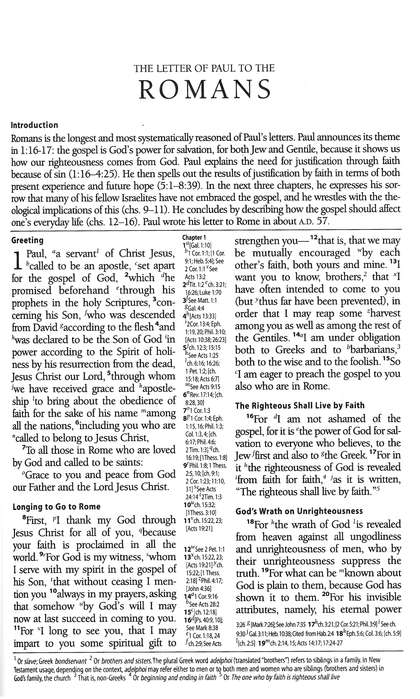
My preferences for editions of the revision of the HCSB

NASB large print ultrathin reference

These are somewhat insignificant hopes but they still exist nonetheless.  I am hoping that when the revision is released that B&H Publishing will release a non-thinline reference Bible.  I still like the basic size of the Foundation Publications large print ultrathin NASB reference Bible (I don’t like that it is verse format, but I don’t mind the size, the paper is great).  I wouldn’t even mind if B&H released an HCSB reference Bible that was the size of the ESV Classic Reference Bible.

ESV classic reference

I prefer a classic reference Bible for study and teaching/preaching. I would be ecstatic if B&H would produce and release an HCSB in a classic reference Bible format.  It is a very functional and helpful format.  The HCSB Hand Size Giant Print Reference Bible is not a bad size.  Yet, I do not care for the Jewel Verse System (which lists a few references after the paragraph).  This formatting does not allow for many references to be listed.  The formatting also does not allow for a full concordance to be included.  I would prefer more references and a full concordance.

HCSB Handsize Giant print reference

I like the formatting of a classic reference Bible.  I like two columns of text and a center column set full of cross references.  I know that cross references are not important to everyone.  I also know that there are many reference Bibles that have cross references that seem to have no logical connection with the verses they accompany.  Yet, I believe that Scripture is the best interpreter of Scripture.  Therefore, a reference Bible which provides logically connected cross references would be a desirable item for me.

It is possible that I have simply become accustomed to the traditional formatting of a classic reference Bible.  It works for me.  It is very useful for preaching/teaching and studying the biblical text.  I hope that B&H Publishing produces and distributes a classic reference Bible with a full concordance and center column references in a non-thinline format.  If such a product is produced if it is anywhere between the size of the Foundation Large Print Ultrathin Reference Bible and the ESV Classic Reference Bible, I will be ecstatic.

Update:

I have been thinking about my preferences for new editions of the HCSB revision and I have also decided besides wanting a classic reference Bible, I would also like to see a wide margin, single column reference Bible for the HCSB revision.  I would love to have one of each.

Reblog this post [with Zemanta]

Inexpensive HCSB Bibles

Broadman & Holman launched a new ministry months ago which is named Holman Bible Outreach International.  This ministry was started for the purpose of producing and distributing inexpensive editions of the HCSB.  It is an awesome ministry and the Bibles are available for purchase by the case.  Check out the site.

Reblog this post [with Zemanta]

HCSB Minister’s Bible Giveaway

Will at Anwoth blog is giving away a limited edition HCSB Minister’s Bible to someone who gives him ten reasons why you like the HCSB.  Check it out!

Here are my own recently updated reasons:

1) Conservative scholars translated it and reviewed it.
2) It is translated from the most reliable manuscripts.
3) It has attempted to avoid being bound by traditional renderings
4) It is a formal translation that is very, very readable. [Marketers of the ESV should take note. The HCSB is literal, but also very readable. The ESV is literal, but not as readable.]
5) It is published by a conservative Christian company
6) It retains traditional theological terms
7) The bullet notes are excellent. I wish that there were some way to place the bullet note information closer to the appropriate text. I have come to despise end-notes and love footnotes. Honestly, I do not know where this information could be placed in the footer because the textual notes (which are even more valuable than the bullet notes) are already located in the footer. I do not know what the answer is, other than for me to get over my aversion to the end-notes.
8) It will be distributed worldwide for evangelism purposes through Holman Bible Outreach International
9) There are many editions produced which are evangelism Bible handbooks; ex: Share Jesus Without Fear N.T.; The Way of the Master N.T.; Darwin’s Bible; Atheist’s Bible.
10) Those who are involved in the process of revision are truly listening to those who will be using the HCSB in local churches, colleges, and seminaries. I appreciate that they are trying their best by God’s grace to “get it right.” Praise the Lord for this desire.

Reblog this post [with Zemanta]