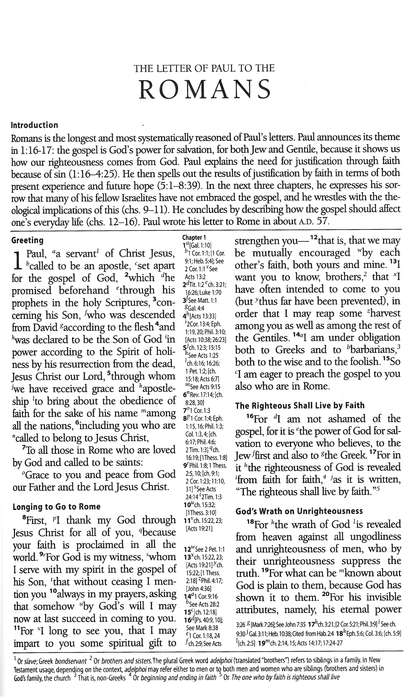
I am selling my Foundation Publications Calfskin NASB Bible on Amazon. This is the one that I did a review for on this very blog. I am selling it for $65 and it is in very good condition. I am also selling an ESV thinline Bible, an HCSB Scofield Reference Bible, an HCSB hardcover text Bible, and an HCSB gift & award Bible. They are all very reasonably priced and I am no longer in need of them.
English Standard Version
HCSB Study Bible – Thoughts from contributor Jeremy Howard
I was at the HCSB Study Bible site today and found this new posting by one of the contributors Jeremy Howard detailing the approach to what was included and excluded from the study notes:
Approximately 15,000 study notes appear throughout the HCSB Study Bible. We could have included more. As you can see from the list of contributors, there was no shortage of scholarship for this study Bible. What led us to be so discriminate about the notes we included is that input from study Bible users reflected their desire to have necessary, relevant notes within the context of the Scripture being studied. That meant information – notes, maps, illustrations – should be concise and impactful, plus easy to find. Rather than overwhelming the text of Scripture, the study notes and other aids are designed to serve the student of God’s Word and not distract from the text itself…
It is interesting that the number of notes is less than the MacArthur study Bible, the ESV Study Bible, and the Zondervan Study Bible. It is not a competition for sure and as I am certain others have found at times – less is more.
My preferences for editions of the revision of the HCSB
These are somewhat insignificant hopes but they still exist nonetheless. I am hoping that when the revision is released that B&H Publishing will release a non-thinline reference Bible. I still like the basic size of the Foundation Publications large print ultrathin NASB reference Bible (I don’t like that it is verse format, but I don’t mind the size, the paper is great). I wouldn’t even mind if B&H released an HCSB reference Bible that was the size of the ESV Classic Reference Bible.
I prefer a classic reference Bible for study and teaching/preaching. I would be ecstatic if B&H would produce and release an HCSB in a classic reference Bible format. It is a very functional and helpful format. The HCSB Hand Size Giant Print Reference Bible is not a bad size. Yet, I do not care for the Jewel Verse System (which lists a few references after the paragraph). This formatting does not allow for many references to be listed. The formatting also does not allow for a full concordance to be included. I would prefer more references and a full concordance.
I like the formatting of a classic reference Bible. I like two columns of text and a center column set full of cross references. I know that cross references are not important to everyone. I also know that there are many reference Bibles that have cross references that seem to have no logical connection with the verses they accompany. Yet, I believe that Scripture is the best interpreter of Scripture. Therefore, a reference Bible which provides logically connected cross references would be a desirable item for me.
It is possible that I have simply become accustomed to the traditional formatting of a classic reference Bible. It works for me. It is very useful for preaching/teaching and studying the biblical text. I hope that B&H Publishing produces and distributes a classic reference Bible with a full concordance and center column references in a non-thinline format. If such a product is produced if it is anywhere between the size of the Foundation Large Print Ultrathin Reference Bible and the ESV Classic Reference Bible, I will be ecstatic.
Update:
I have been thinking about my preferences for new editions of the HCSB revision and I have also decided besides wanting a classic reference Bible, I would also like to see a wide margin, single column reference Bible for the HCSB revision. I would love to have one of each.
Who will recommend the HCSB?
This has bothered me for some time now. I believe that the HCSB is an excellent translation of the Scriptures. The only problem is that there is not a comprehensive list of scholars and pastors (graduate students and bloggers) who recommend the HCSB. I think that those who are supporters of the HCSB should work to remedy this problem. Any person can do a simple web search and find that the ESV has a long list of scholars and pastors (graduate students and bloggers) who heartily recommend this respective translation.
The HCSB is a very well done translation and I am certain that there are plenty of scholars and pastors who would heartily recommend the HCSB. My challenge for you who support the HCSB (including Graduate students and bloggers), write a paragraph (I emphasize paragraph) about why you recommend the HCSB. Let’s see if a comprehensive list of HCSB supporters could be compiled. Who is willing to help?
The Appeal of the HCSB
After a time of setting the HCSB to the side out of loyalty to the NASB and familiarity with the same, I have again began seriously examining the HCSB as a primary study and preaching Bible. There are many things to like about the HCSB.
- Conservative scholars translated it and reviewed it.
- It is translated from the most reliable manuscripts.
- It has attempted to avoid being bound by traditional renderings
- It is a formal translation that is very, very readable. [Marketers of the ESV should take note. The HCSB is literal, but also very readable. The ESV is literal, but not as readable.]
- It is published by a conservative Christian company
- It retains traditional theological terms
- The bullet notes are excellent. I wish that there were some way to place the bullet note information closer to the appropriate text. I have come to despise end-notes and love footnotes. Honestly, I do not know where this information could be placed in the footer because the textual notes (which are even more valuable than the bullet notes) are already located in the footer. I do not know what the answer is, other than for me to get over my aversion to the end-notes.
There is one thing that I would absolutely love for B&H to produces is a regular size reference Bible for the HCSB, not a thinline. It would be great if it were a black letter Bible also. This is my hope.
I am persuaded now that the updated HCSB will be my choice for study and preaching in the future. It is an excellent translation of the Bible. When you read the litany of promises regarding the ESV which report accuracy and readiblity, check out the HCSB and you will find in actuality what is only promised in the ESV.
NET Bible First Edition review
I received a review copy the NET Bible First Edition in black a few weeks ago. The cover itself is a very nice bonded leather with hubs on the binding (a classic look). The one thing that I do wish is that they had gone with a genuine leather cover or something that would be a bit sturdier. The contents of the Bible are so large that I doubt the cover can withstand continued use without cracking or tearing (though the true test will be time of use). The pages are smyth-sewn which is a huge positive. This ensures greater durability of the binding and also for the bible to lay flat when open. The pages themselves are thin, probably a little thinner than normal Bible paper (not nearly as nice as the Lockman NASB’s – large print ultrathin reference Bible and wide margin single column reference Bible). The overall the Bible itself is well-made.
The translation itself is very good. It is toward the formal equivalence end of the spectrum. There are places where the NET has clarified ambiguities that are found in the original text. This has made a more idiomatic translation than the NASB and the ESV. Yet, there are places where this causes the NET to be more accurate such as, John 1:18 and John 3:16. One of the features of the NET that is unique are the chapter and verse markings. The NET includes the chapter number along with each verse marking, ex: John 1:1, 1:2, 1:3, 1:4 and so on. This is not a problem for me, though it did take some time to become acquainted with it. The satellite maps that are found in the back of the Bible are full color and topographical. These are by far some of the nicest looking maps that I have ever seen in any study resource. They truly open your eyes to the features of the areas in question. The maps are a bonus.
Now, time to discuss the study notes. These by far are worth their weight in gold. There are three different types of notes: study notes, technical commentary, and technical notes. The study notes are what you would find in other scholarly study Bibles. The technical notes are alternative translation options or a more literal translation option. The technical commentary notes are filled with a vast treasury of notes on the original languages. The notes are much like technical notes you would find in a Greek or Hebrew grammar. Yet, the blessing is that the notes are found beneath the text in question. In a grammar you have to search the index to find if there might possibly be help in regard to a text you are studying. The Bible came with a Bible.org Bible Library resource C.D. I have not even had a chance to examine this added resource. It seems like the NET Bible is like the gift that keeps on giving!
I truly like the translation itself. I believe that it is very accurate and yet readable. The scholars are from Dallas Theological Seminary. Therefore they are conservative evangelicals. It has been stated that the NET will be revised every five years beginning in 2010. This helps you to realize that the translators are striving for the best translation of the Word of God possible. The only drawback for me as a pastor is that people will have to buy a new copy every five years (though I don’t want to sound cranky, I am not, and I personally don’t mind doing so).
I read somewhere that someone was hoping that the NET would replace the NIV as an idiomatic translation. I don’t know if that will happen but I do believe that it is that good. I would highly recommend the NET Bible as a preaching and teaching resource. I would say that it is non-negotiable to own it as a study resource. At the very least, download the electronic version on Bible.org.


The Bible also comes with a resource c.d. with study materials. I have not yet had an opportunity to check out this bonus resource.


The Bible is significant in size. But that is to be expected when you have over 60,000 study notes contained in it.

This Bible is smyth sewn and therefore opens fairly flat. The pages are what you would normally find in other Bibles. They are not the thickness of the ESV wide margin or the NASB large print ultrathin.

This is what you will find in some texts where there is a lot to be explained textually. It is a black letter text which is a positive.

Here is an example of what the satellite maps look like. They are a bonus.

Like the Bible itself, the ribbon marker is larger than most other Bibles feature.

The sewn binding and the weight of the Bible cause it to open fairly flat. I do wonder how well the premium bonded leather will hold up under frequent use.
ESV Wide Margin Reference Edition (Tru-Tone Portfolio Edition)
I received a review copy of the ESV Wide Margin Reference Edition from Crossway a few weeks ago. I have been a longtime NASB user. The edition that was sent to me was the Portfolio style in TruTone. The cover itself is beautiful. It is very soft to the touch and flexible. It is a delight to hold. It is obviously not as nice as a calfskin cover, but from what I have heard it may be superior to the genuine leather edition. The pages are fairly thick, thicker than most other Bible paper. The paper is not as nice as that found in Lockman NASB’s (large print ultrathin reference Bible and the wide margin reference Bible). There is a nice amount of space on the outside edge of the page for which to write notes. It is unfortunate (as many others have written) that the inside margin is too narrow for writing notes. The one request that I have for Crossway is that they switch this edition to a sewn binding. It is glued and eventually will begin to pull away. The glued binding also keeps the Bible from laying completely flat. One interesting note, the box said that the Bible is guaranteed for life! This is an impressive promise.
The translation itself is very similar to the NASB. There are some places where the scholars have updated some archaic words or renderings which are contained in the NASB such as, brethren to brothers; only begotten Son to only Son. There are some places where the ESV has eliminated some of the supplied words that are used in the NASB, which at times has led to greater clarity. Interestingly enough, the ESV does use some anglicized wording that does sound a little odd to the modern-day American reader such as, haughty, rubbish, puffed up (which I realize is a literal metaphor from the Greek language). I will not belabor the point. It is something that each individual believer would need to examine to determine if the language is comfortable for him.
I would like to say that I do believe that the ESV is a very good translation. I would highly recommend it to others. I believe that it is an accurate translation which will be useful to the church. Crossway has also provided many excellent editions of this translation which make it very likely that a believer will find an edition that fits his preferences such as, the personal reference Bible, classic reference Bible, thin-line edition, the single column reference edition, as well as many others. I really like the TruTone editions that Crossway has produced, they make it possible to have a very attractive Bible which is pleasant to hold and use.
If you are interested in this edition or other editions of the ESV, I would recommend that you check out the Westminster Seminary bookstore as a result of their exceptional prices.


It is a glued binding so the Bible does not lay completely flat when opened, but not terrible. One thing that was surprising is that Crossway now offers a Life-time guarantee on these Bibles.

The wide margins are nice. The paper is also surprisingly nice. It is a black letter text in paragraph format, very nice.


The TruTone cover is soft and flexible. As you can see the Bible does open nicely, even though it is not a sewn binding.
NET Bible First Edition review
I received a review copy the NET Bible First Edition in black a few weeks ago. The cover itself is a very nice bonded leather with hubs on the binding (a classic look). The one thing that I do wish is that they had gone with a genuine leather cover or something that would be a bit sturdier. The contents of the Bible are so large that I doubt the cover can withstand continued use without cracking or tearing (though the true test will be time of use). The pages are smyth-sewn which is a huge positive. This ensures greater durability of the binding and also for the bible to lay flat when open. The pages themselves are thin, probably a little thinner than normal Bible paper (not nearly as nice as the Lockman NASB’s – large print ultrathin reference Bible and wide margin single column reference Bible). The overall the Bible itself is well-made.
The translation itself is very good. It is toward the formal equivalence end of the spectrum. There are places where the NET has clarified ambiguities that are found in the original text. This has made a more idiomatic translation than the NASB and the ESV. Yet, there are places where this causes the NET to be more accurate such as, John 1:18 and John 3:16. One of the features of the NET that is unique are the chapter and verse markings. The NET includes the chapter number along with each verse marking, ex: John 1:1, 1:2, 1:3, 1:4 and so on. This is not a problem for me, though it did take some time to become acquainted with it. The satellite maps that are found in the back of the Bible are full color and topographical. These are by far some of the nicest looking maps that I have ever seen in any study resource. They truly open your eyes to the features of the areas in question. The maps are a bonus.
Now, time to discuss the study notes. These by far are worth their weight in gold. There are three different types of notes: study notes, technical commentary, and technical notes. The study notes are what you would find in other scholarly study Bibles. The technical notes are alternative translation options or a more literal translation option. The technical commentary notes are filled with a vast treasury of notes on the original languages. The notes are much like technical notes you would find in a Greek or Hebrew grammar. Yet, the blessing is that the notes are found beneath the text in question. In a grammar you have to search the index to find if there might possibly be help in regard to a text you are studying. The Bible came with a Bible.org Bible Library resource C.D. I have not even had a chance to examine this added resource. It seems like the NET Bible is like the gift that keeps on giving!
I truly like the translation itself. I believe that it is very accurate and yet readable. The scholars are from Dallas Theological Seminary. Therefore they are conservative evangelicals. It has been stated that the NET will be revised every five years beginning in 2010. This helps you to realize that the translators are striving for the best translation of the Word of God possible. The only drawback for me as a pastor is that people will have to buy a new copy every five years (though I don’t want to sound cranky, I am not, and I personally don’t mind doing so).
I read somewhere that someone was hoping that the NET would replace the NIV as an idiomatic translation. I don’t know if that will happen but I do believe that it is that good. I would highly recommend the NET Bible as a preaching and teaching resource. I would say that it is non-negotiable to own it as a study resource. At the very least, download the electronic version on Bible.org.
![Reblog this post [with Zemanta]](https://i0.wp.com/img.zemanta.com/reblog_e.png?w=676)